

 English
 عربى

News
Home / News / Industry News / What Is Rotational Molding? A Complete Guide to Process, Materials, and Uses
Rotational molding is one of those processes that is simple to describe and much harder to do well. In plain terms, it turns plastic powder into hollow, seamless parts by slowly rotating a mold inside an oven until the powder melts and coats the inside wall. If you have ever stored water in a thick green tank, walked along a marina pontoon, or driven past a water-filled barrier at a road works site, you have already met a rotationally molded product.
Rotational molding, also called rotomolding, rotocasting, or rotomoulding depending on where you are reading this, is a low-pressure, high-temperature process for making hollow plastic articles. A measured charge of finely ground polymer goes into a hollow split mold, the mold is clamped shut, and it turns on two perpendicular axes inside an oven.
As the tool heats up, the powder tumbles and sticks to the hot inner surfaces, melting in layers until it forms an even skin across the whole cavity. The mold then moves to a cooling station, still turning, so the part keeps its shape instead of sagging. When it is cool enough, the mold opens and the piece comes out as a single seamless article.
One detail is worth remembering: the wall thickness is decided by how much powder you charge, not by the mold itself, which is why a single tool can often produce several capacities.
Every job follows the same sequence, whether the part is a 40-litre dosing bucket or a 10,000-litre storage tank.
Cycle times run longer than in injection molding, often twenty minutes to an hour depending on size and material, but the tooling is simpler and far cheaper. For a large hollow part, that trade-off usually decides the project.
Not every plastic suits the process. The resin has to survive being ground to powder and heated through a long cycle without degrading, so the list is shorter than many people expect.
Additives matter as much as the base resin. UV stabilisers, colour masterbatch, and anti-static agents are chosen for the end use, because a tank standing in the sun for fifteen years needs a different formulation from a buoy sitting in salt water.
Because of the way the process works, rotationally molded products share a recognizable set of traits.
It helps to see rotational molding next to its two closest relatives. The table below is a rough guide rather than a rule, because part size and order quantity shift the numbers considerably.
| Process | Typical wall thickness | Tooling cost | Best suited to |
|---|---|---|---|
| Rotational molding | 3 to 12 mm, even throughout | Low to moderate | Large hollow parts, low to medium volumes |
| Injection molding | 1 to 4 mm, varies by design | High | Small, detailed, high-volume parts |
| Blow molding | 0.5 to 3 mm | Moderate | Bottles, jars, and thin containers |
The practical summary: rotational molding wins when you need a big hollow part with a thick, durable wall and you cannot justify an expensive steel tool. It is a poor fit for small, highly detailed components made in millions.
Because the process handles large hollow shapes so well, rotomolded parts turn up in more places than most people expect.
Water treatment is a good illustration. A cone-bottom PE storage tank is molded as a single piece, with a thick corrosion-resistant wall, an integrally formed cone, and no joints that can leak.
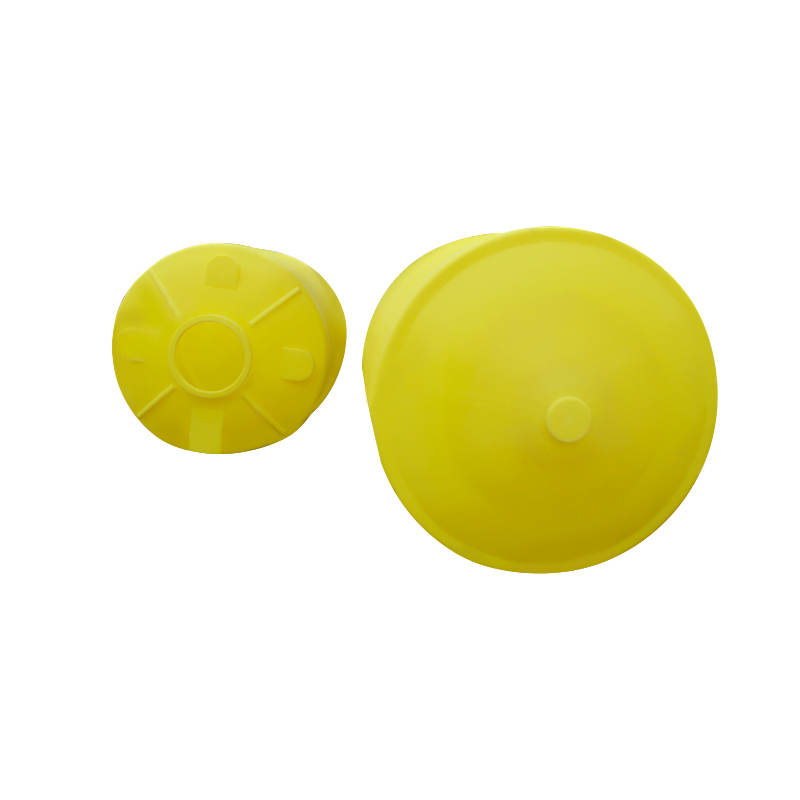 CPT-5000L Cone Bottom PE Storage Tankused in water treatment, environmental protection, electronics, chemical industry, food, medicine, construction and other industriesView Product →
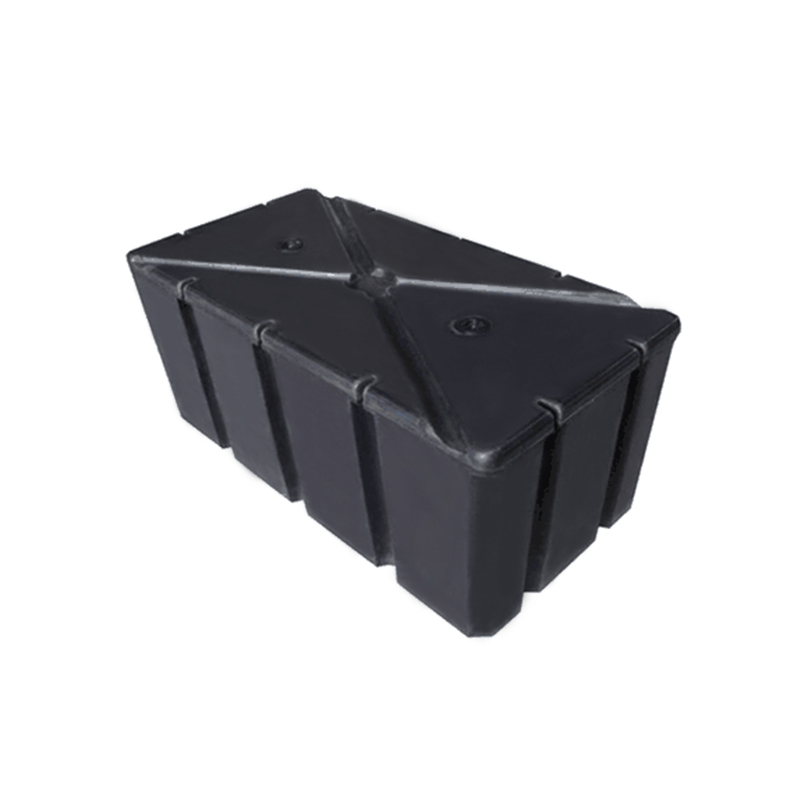
Floating products follow the same logic. Polyethylene does not corrode in salt water, so hollow and foam-filled floats stay serviceable for years in harbours and fish farms. We wrote about this in more detail in a short piece on why LLDPE floating platforms resist corrosion.
 Rotomolding LLDPE Floating PlatformCixi Junyi Plastic Co., Ltd., since its establishment in 2007, has been located in Cixi, Zhejiang, known as the hometown of rotational molding. The company is strategi...View Product →
Plenty of projects do not start from a catalogue. They start with a sketch, a sample, or a problem that no standard product solves. In those cases the work begins at the drawing board: wall thickness, rib layout, insert placement, and the mold parting line are decided together, because a change in one usually forces a change in another.
Tooling is where rotational molding is at its most forgiving. Aluminium molds cost a fraction of a hard injection tool, so a modest first order can still make sense, and the same mold can be run again later as volumes grow. Development and OEM work is a large part of what we do, and it is covered in more detail under custom rotomolded parts and OEM processing.
A fuel tank is a typical example: a complex outer shape, internal baffles, and moulded-in fittings, produced as one stress-free molding instead of a welded assembly.
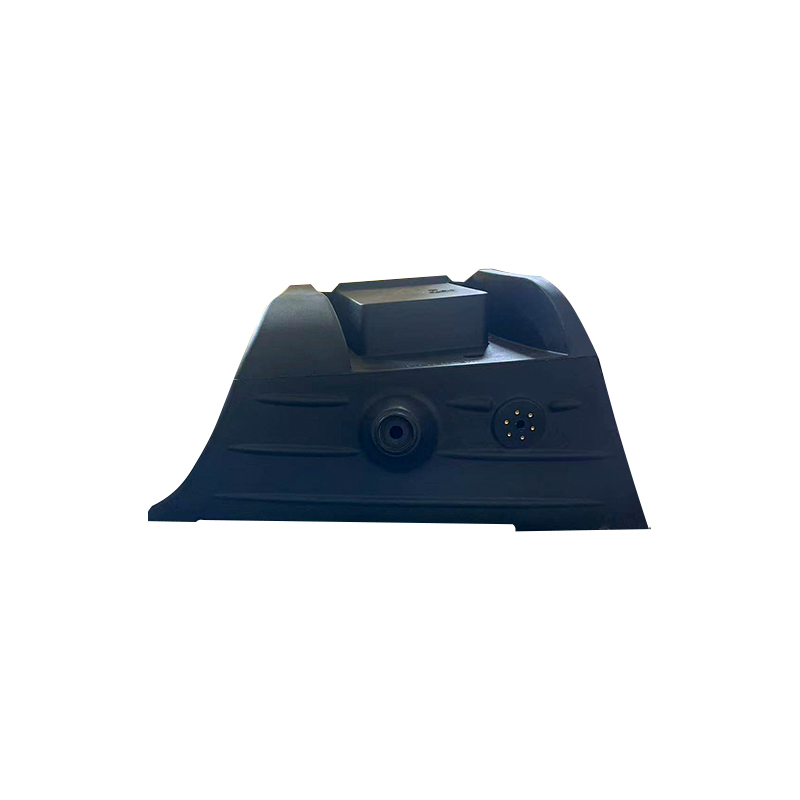 Rotomolding Plastic LLDPE Fuel TankContainers used to store liquidsView Product →
We have been making rotationally molded products since 2007, in Cixi, a city on China's east coast that people here like to call the hometown of rotomolding. Our workshop sits about two kilometres from Yuyao North high-speed rail station and roughly fifteen kilometres from the Hangzhou Bay Bridge, which keeps visits and shipments straightforward.
Over the years we have learned that most of the craft lives in details nobody sees: how evenly the powder is charged, how gently the mold is cooled, and how carefully a fitting is positioned before the tool is finished. Those choices decide whether a tank lasts fifteen years or five. We build our own molds, produce standard water treatment and aquaculture products, and take on custom work for customers who need something that does not exist yet.
So, to answer the question directly: rotational molding is a low-pressure process that turns plastic powder into hollow, seamless, stress-free products, from a 40-litre dosing bucket to a 10,000-litre storage tank. It is not the fastest method or the most precise, but for large, tough, watertight parts made in sensible volumes, few processes come close.


 wuyuqiao village, Henghe Town, Cixi City, Zhejiang Province
 +86-15257871220
 [email protected]
