

 English
 عربى
عربى
News
Home / News / Industry News / The Complete Guide to PE Storage Tanks: Types, Applications, and Installation Tips
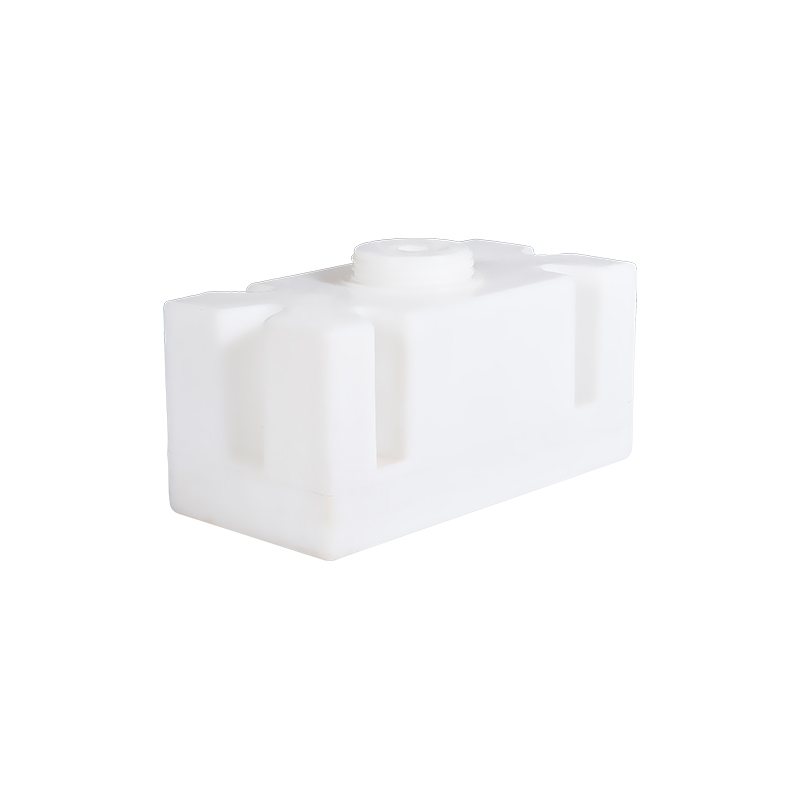
A PE storage tank is a liquid storage vessel molded from polyethylene, most commonly using the rotational molding (rotomolding) process, and typically built with an FDA-approved linear low-density polyethylene (LLDPE) or high-density polyethylene (HDPE) resin. These tanks range from small 50-gallon chemical drums to large 10,000+ gallon agricultural and water storage vessels, and they're chosen over steel or fiberglass alternatives primarily for their corrosion resistance, lighter weight, and lower cost per gallon. Choosing the right PE tank comes down to matching three things: the tank's specific gravity rating to the density of the liquid being stored, the wall thickness and design to your climate and installation type (above-ground vs. below-ground), and the resin/liner compatibility to the chemical you're storing.
PE storage tanks are manufactured almost entirely through rotational molding, a process where powdered polyethylene resin is loaded into a hollow mold, then rotated on two axes inside an oven until the plastic melts and coats the interior walls evenly. This creates a single-piece, seamless tank with no welds or seams — a major advantage over steel tanks, where weld points are the most common failure and leak location.
Most tanks use one of two resin types: HDPE, valued for rigidity and chemical resistance, or LLDPE, valued for flexibility and impact resistance in colder climates where brittleness becomes a concern. Many premium tanks use a multi-layer construction, with a natural or FDA-approved liner on the interior wall and a UV-stabilized, pigmented outer layer to resist sun degradation over the tank's outdoor service life.
PE tanks are generally grouped by shape and installation orientation, since each type suits a different footprint and use case.
| Tank Type | Typical Capacity | Best Use Case |
|---|---|---|
| Vertical tank | 50–10,000 gallons | Water storage, chemical storage, small footprint sites |
| Horizontal (leg) tank | 100–6,000 gallons | Truck-mounted or trailer transport applications |
| Cone-bottom tank | 15–2,500 gallons | Chemical mixing and full drainage applications |
| Underground/cistern tank | 300–10,000+ gallons | Septic systems, rainwater harvesting, well water storage |
| IBC tote | 275–330 gallons | Portable industrial liquid transport and short-term storage |
PE storage tanks show up across a wide range of industries, largely because polyethylene resists the corrosion that would damage a metal tank exposed to the same liquids over years of service.
One of the most overlooked specifications when buying a PE tank is its specific gravity (SG) rating, which indicates the maximum density of liquid the tank is engineered to hold safely. Water has a specific gravity of 1.0, but many chemicals and fertilizer solutions are considerably denser.
A tank rated for 1.5 SG can safely hold a liquid up to 1.5 times the density of water. Using a tank rated only for 1.0 SG (standard water rating) to store a 1.7 SG chemical solution puts far more weight-driven stress on the tank walls than it was engineered for, which can lead to bulging or catastrophic failure over time.
Most water storage tanks are rated at 1.0 to 1.35 SG, while tanks designed specifically for liquid fertilizer or heavier chemical solutions are commonly rated at 1.5 to 1.9 SG. Always confirm the exact specific gravity of your liquid against the tank's rated nameplate before purchase.
Wall thickness in rotomolded tanks isn't uniform — quality manufacturers vary thickness across the tank, adding extra material near the base where hydrostatic pressure is highest. A typical 1,000-gallon vertical tank might have a wall thickness of roughly 0.25 to 0.4 inches at the base, tapering to a thinner wall near the top.
Tanks also commonly include structural ribbing on vertical models to resist bulging under full-liquid load, and a slight taper or knuckle radius at the base to distribute stress evenly rather than concentrating it at a sharp corner.
While polyethylene resists a broad range of chemicals better than mild steel, it isn't universally compatible with everything. Before selecting a tank, check a chemical resistance chart against your specific resin type for the exact chemical, concentration, and expected storage temperature.
| Factor | PE Tank | Steel Tank | Fiberglass Tank |
|---|---|---|---|
| Corrosion resistance | Excellent | Poor without coating | Excellent |
| Relative cost | Low | Medium | High |
| Typical lifespan | 15–20 years | 10–15 years (uncoated) | 20–30 years |
| Weight | Lightweight | Heavy | Medium |
Underground tanks face additional stresses from soil weight, groundwater pressure, and surface loading that above-ground tanks never encounter, so a few extra precautions apply.
PE tanks require relatively little maintenance compared to steel, but a few routine checks extend service life significantly.
PE storage tanks offer a corrosion-resistant, lightweight, and cost-effective alternative to steel and fiberglass across agriculture, water treatment, chemical processing, and wastewater applications. Choosing and installing one successfully depends on matching the tank's specific gravity rating to your liquid's density, confirming chemical compatibility with the resin type, and following proper pad or backfill installation practices — details that determine whether a tank delivers its full 15–20 year expected service life or fails well ahead of schedule.

 wuyuqiao village, Henghe Town, Cixi City, Zhejiang Province
 +86-15257871220
 [email protected]
