For most rotational float mold applications, cast aluminum is the default correct choice — it offers the best combination of thermal conductivity, surface finish capability, dimensional accuracy, and weight-to-strength ratio for float geometries. Steel fabricated molds are the right choice when production volumes are low, budgets are tight, or the float design requires large flat panels that are impractical to cast. Cast steel occupies a narrow specialist niche for very large floats or exceptionally abrasive materials. The decision is not purely about material cost — it is about total cost per part over the mold's production life, thermal cycling performance, and the specific geometric demands of the float being produced.
Why Mold Material Choice Matters More in Rotomolding Than in Other Processes
In injection molding or blow molding, the mold is held at a controlled temperature by internal cooling channels, and cycle times are measured in seconds. In rotational molding, the entire mold — with the plastic charge inside — is placed in an oven at 260°C–370°C, rotated for 15–40 minutes, then moved to a cooling station where it is cooled by forced air or water mist for another 10–25 minutes. The mold material undergoes this full thermal cycle with every single part produced.
This means the mold material's thermal conductivity, thermal mass, and thermal expansion coefficient directly determine how fast the plastic powder sinters, how uniformly the wall thickness develops, and how quickly the finished float can be demolded. A material with poor thermal conductivity creates temperature gradients across the mold surface — the plastic sinters faster near the parting line than at the extremities, producing uneven wall thickness that directly compromises float buoyancy and structural integrity.
For float molds specifically, wall thickness uniformity is particularly critical because a float with 20% wall thickness variation across its surface will have a center of buoyancy that does not match the design specification — the float may list, sit low on one end, or fail hydrostatic testing even when total material weight is correct.
Cast Aluminum: Why It Is the Standard Choice for Float Molds
Cast aluminum dominates rotational float mold production for well-documented technical reasons. Its thermal conductivity of approximately 150–180 W/m·K is roughly 4–5× higher than steel (40–50 W/m·K), which translates directly into faster, more uniform heat transfer through the mold wall to the plastic charge. For a float mold with typical wall sections of 15–25 mm, this means the inner mold surface reaches sintering temperature faster and more evenly across complex curved geometries.
Thermal Performance in Practice
The practical impact of aluminum's thermal advantage is measurable in cycle time. A cast aluminum float mold typically completes the heating phase in 18–25 minutes at 300°C oven temperature for a medium-sized float (50–200 liters displacement), while an equivalent steel fabricated mold of the same wall section requires 25–35 minutes to achieve equivalent internal surface temperature. Over a production run of 10,000 floats, this difference compounds into significant energy and machine time savings. A 20% reduction in cycle time increases machine throughput by 25% — the equivalent of gaining one extra production day per four days of operation.
Surface Finish and Detail Reproduction
Cast aluminum can be machined and polished to surface finishes of Ra 0.4–1.6 μm without exceptional difficulty, producing float surfaces with cosmetic quality suitable for marine, aquatic facility, and recreational applications. Texture patterns, logo embossments, and anti-slip surface features can be incorporated directly into the casting pattern and reproduced with ±0.1 mm dimensional accuracy across the mold face. Draft angles as shallow as 1°–2° are achievable in cast aluminum, which is important for floats with near-vertical sidewalls.
Weight Advantage for Operator Handling
Aluminum's density of approximately 2.7 g/cm³ compared to steel's 7.8 g/cm³ means a cast aluminum float mold weighs roughly one-third of an equivalent steel mold. For a medium float mold with a total mold weight of 80–120 kg in aluminum, the steel equivalent would weigh 230–350 kg. This matters for manual handling during mold changes, arm positioning on the rotomolding machine, and the dynamic balance of the machine's rotating arms — a heavier mold requires a more powerful drive system and increases wear on bearings and arm pivot points.
Limitations of Cast Aluminum
- Tooling cost: A cast aluminum float mold requires a pattern (wooden, CNC-machined foam, or 3D-printed), a casting foundry run, and post-cast machining. Total tooling cost for a medium float mold typically ranges from €8,000–€25,000 depending on complexity — significantly more than a fabricated steel equivalent at €3,000–€10,000.
- Lead time: Pattern making, casting, and machining typically require 8–16 weeks for a new cast aluminum mold. Fabricated steel molds can be completed in 3–6 weeks.
- Repairability: Aluminum welds with difficulty — porosity in repair welds is common and can create surface blemishes that transfer to the float surface. Deep damage to the mold cavity face often requires professional TIG welding and remachining.
- Size limitations: Very large float molds (above approximately 2,000 mm in any dimension) become difficult to cast as a single piece without porosity defects. Sectional casting with mechanical joining is possible but adds complexity and potential leak points at the joints.
Fabricated Steel: When Lower Tooling Cost Justifies the Thermal Penalty
Fabricated steel molds — constructed by cutting, forming, and welding steel plate — are the standard choice for low-volume production, prototype development, and float geometries that are predominantly flat-surfaced and therefore straightforward to fabricate without casting.
Where Steel Fabrication Has a Genuine Advantage
- Low production volumes (under 500–1,000 parts): The lower tooling cost of a fabricated steel mold (€3,000–€10,000) amortizes more favorably over short runs. If a float design is expected to produce only 200 units before the product is discontinued or redesigned, the additional €10,000–€15,000 investment in a cast aluminum mold cannot be recovered through cycle time savings alone.
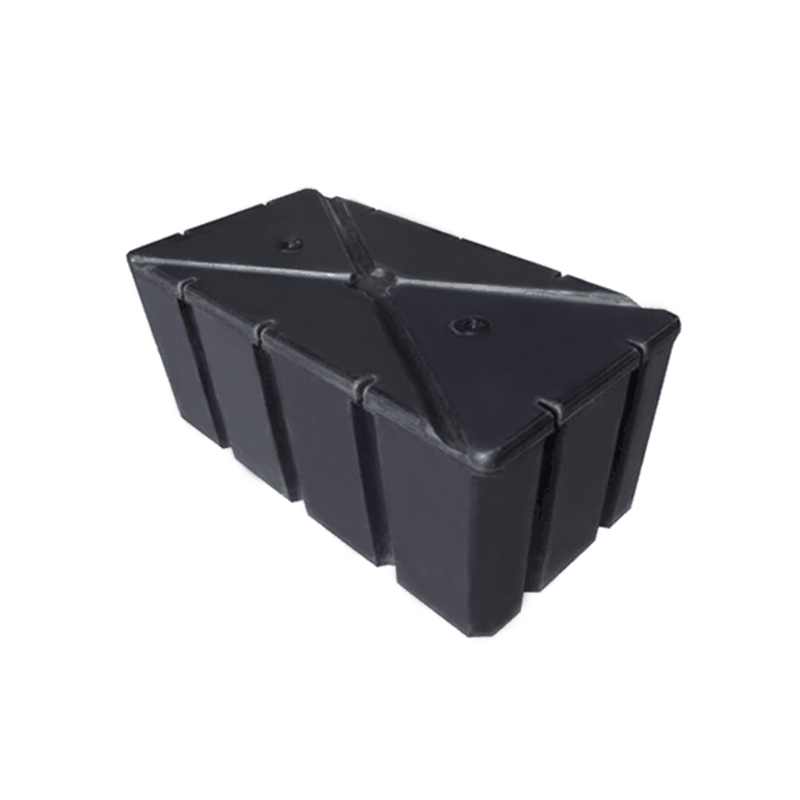
- Large flat-panel float designs: Dock floats, pontoon sections, and platform floats with predominantly flat faces are geometrically well-suited to fabrication. Cutting and welding flat steel plate is fast and precise — a 2,000 mm × 1,000 mm flat-faced dock float mold can be fabricated to ±1 mm dimensional accuracy without the complexity and cost of casting.
- Prototype and development molds: When float geometry is still being refined, a fabricated steel mold can be modified — panels cut out, new sections welded in, parting lines repositioned — at relatively low cost. Modifying a cast aluminum mold involves remachining the casting, which is expensive and sometimes structurally impractical.
- Very large floats: For floats above approximately 500-liter displacement, the mold size makes single-piece aluminum casting impractical. Large steel fabrications with wall sections of 6–10 mm plate are structurally straightforward and can be constructed by any competent fabrication shop.
Managing Steel's Thermal Limitations
The lower thermal conductivity of steel produces longer cycle times and increased risk of wall thickness variation — but these effects can be partially mitigated by design choices:
- Use thinner plate where possible: Reducing steel plate thickness from 6 mm to 4 mm decreases thermal mass and improves heat transfer rate. For non-structural mold faces, 3–4 mm plate is adequate and significantly improves thermal response.
- Add thermal fins or copper inserts at thick sections: Weld-on external copper or aluminum fins at areas of the mold that are geometrically thick (corners, bosses, reinforcing ribs) accelerate local heat input and reduce the temperature differential across the mold surface.
- Increase oven temperature slightly: Running the oven at 10°C–15°C higher for steel molds compared to aluminum compensates partially for the lower conductivity — but requires careful process validation to avoid overheating the plastic at thin sections while bringing thick sections to adequate temperature.
Cast Steel: A Narrow Specialist Application
Cast steel molds combine the dimensional accuracy and surface detail capability of casting with the higher strength and wear resistance of steel. However, they retain steel's poor thermal conductivity and add the high cost of steel foundry work — making them the most expensive option with no thermal advantage over fabricated steel.
Cast steel is justified in float mold applications only under specific conditions:
- Highly abrasive material compounds: Some specialty float applications use polyethylene compounds with glass fiber, mineral filler, or flame retardant additives that are abrasive to soft aluminum surfaces. Cast steel's higher hardness (Brinell hardness 150–200 HB versus 70–100 HB for aluminum alloys) resists wear from abrasive compounds significantly better, justifying the higher cost in long production runs with these materials.
- Very high clamping force applications: Float designs with deep undercuts or aggressive parting line geometry that require high mold clamping forces during demolding can crack or deform aluminum sections that would be easily withstood by steel.
- Very large production volumes with complex geometry: When a float has complex compound curves unsuitable for fabrication and production volumes are very high (above 50,000 units), the longer service life of cast steel (potentially 2–3× more cycles than cast aluminum before resurfacing is required) can justify the premium tooling cost.
Key Material Properties Compared Across All Three Options
| Property |
Cast Aluminum |
Fabricated Steel |
Cast Steel |
| Thermal conductivity |
150–180 W/m·K |
40–50 W/m·K |
35–45 W/m·K |
| Density |
2.7 g/cm³ |
7.8 g/cm³ |
7.7–7.8 g/cm³ |
| Thermal expansion (×10⁻⁶/°C) |
23 |
12 |
12 |
| Surface hardness (HB) |
70–100 |
120–180 |
150–200 |
| Typical mold wall thickness |
15–25 mm |
3–8 mm plate |
15–25 mm |
| Relative tooling cost (medium float) |
€8,000–€25,000 |
€3,000–€10,000 |
€15,000–€40,000 |
| Typical tooling lead time |
8–16 weeks |
3–6 weeks |
10–20 weeks |
| Cycle time vs aluminum baseline |
Baseline (100%) |
+25–40% longer |
+30–45% longer |
| Expected service life (cycles) |
50,000–100,000+ |
30,000–80,000 |
100,000–200,000+ |
| Repairability |
Moderate (TIG weld, remachine) |
Excellent (MIG/TIG weld, grind) |
Good (weld repair, remachine) |
Comparative material properties and production characteristics for rotational float mold material options
Thermal Expansion: The Hidden Design Variable That Affects Mold Life
Aluminum's thermal expansion coefficient of 23 × 10⁻⁶/°C is approximately twice that of steel at 12 × 10⁻⁶/°C. Over the temperature range of a rotomolding cycle (ambient to 300°C+), this means a 1,000 mm dimension in the mold will expand by approximately 6.9 mm in aluminum versus 3.6 mm in steel. For float molds, this has three practical consequences:
- Parting line design: Aluminum molds must be designed with parting line gaps and clamp systems that accommodate the larger thermal expansion without causing the mold halves to jam or the parting line to open under thermal load. Parting line flanges on aluminum molds typically have 2–3 mm thermal clearance built in at ambient temperature that closes to zero at operating temperature.
- Insert and insert pocket design: Steel inserts (for threaded bosses, valve fittings, or attachment points) set into an aluminum mold body will have differential expansion at operating temperature. The insert pocket must be sized to accommodate this without cracking the surrounding aluminum — typically requiring an interference fit at ambient that becomes a clearance fit at operating temperature.
- Float dimensional tolerances: Because the mold dimensions change between ambient (when the mold is measured and qualified) and operating temperature (when the part is formed), the float's finished dimensions are determined by the mold's hot dimensions, not its cold dimensions. Float mold cavity dimensions must be calculated from the target float dimensions corrected for both mold thermal expansion and LLDPE shrinkage (typically 2.5–3.5%) to achieve the correct finished float size.
Decision Framework: Selecting the Right Material for Your Float Mold
Use the following decision logic to select the appropriate mold material based on the specific production and geometric requirements of the float:
- Production volume above 2,000 units AND complex curved geometry: Cast aluminum. The cycle time advantage and surface quality justify the tooling investment above this volume threshold for most float sizes.
- Production volume below 1,000 units OR predominantly flat geometry: Fabricated steel. Lower tooling cost and faster lead time outweigh the cycle time penalty at low volumes or for geometrically simple floats.
- Prototype or design development phase: Fabricated steel regardless of intended production volume — the ability to modify the mold cheaply has more value than cycle time optimization at this stage.
- Float dimensions above 2,000 mm in any axis: Fabricated steel or sectional fabrication, as single-piece aluminum casting becomes impractical above this size without specialist foundry capability.
- Abrasive or filled plastic compound: Cast steel if production volume is very high; fabricated steel with hard chrome or thermal spray coating on the cavity face for moderate volumes.
- Volume between 1,000–2,000 units with complex geometry: Calculate total production cost for both options — include tooling amortization, energy cost per cycle, and machine time per cycle. The break-even point between cast aluminum and fabricated steel typically falls in the 1,500–3,000 unit range depending on float size and energy costs.


 English
 عربى
عربى


 wuyuqiao village, Henghe Town, Cixi City, Zhejiang Province
 +86-15257871220
 [email protected]
