

 English
 عربى
عربى
News
Home / News / Industry News / What is a PE Storage Tank and Why is it Preferred for Chemical Storage?
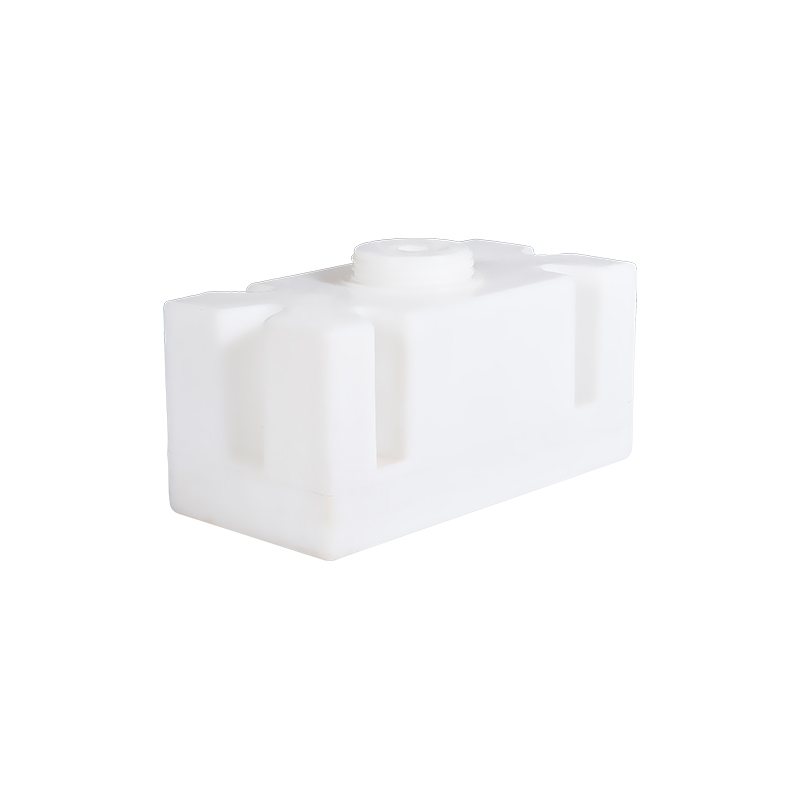
A PE Storage Tank (Polyethylene Storage Tank) is a high-performance industrial container manufactured from polyethylene resins, designed to serve as a robust solution for the containment of liquids, solids, and slurry-like substances. These tanks are ubiquitous in modern industrial landscapes, found in everything from municipal water treatment facilities to advanced chemical processing plants. The defining characteristic of a PE tank is its manufacturing origin: Rotational Molding (or Rotomolding). This process involves a hollow mold filled with powdered resin that is heated and rotated on two axes, ensuring that the molten plastic coats the interior surface evenly to create a single, stress-free, and hollow piece of equipment.
To understand why PE tanks are so effective, one must look at the molecular structure of the polymer. Polyethylene is a thermoplastic consisting of long, flexible chains of ethylene monomers. The density and branching of these chains determine the tank’s physical properties.
Most industrial-grade chemical tanks are constructed from HDPE. The high density refers to a molecular structure with minimal branching, which results in a more rigid, tougher material with higher tensile strength. HDPE provides superior resistance to environmental stress cracking and can withstand higher internal pressures caused by the weight of heavy chemicals. In contrast, LLDPE has significant branching, making it more flexible and impact-resistant, but it lacks the chemical “backbone” required for high-concentration acids.
For the most extreme chemical environments—such as storing sodium hypochlorite or high-concentration sulfuric acid—engineers often specify Cross-Linked Polyethylene (XLPE). During the molding process, a catalyst is added to the resin that creates chemical bonds between the polymer chains, essentially turning the entire tank into one giant molecule. This three-dimensional matrix offers vastly superior resistance to heat and chemical degradation compared to linear polyethylene, making it the “gold standard” for hazardous material containment.
When handling hazardous substances, the choice of storage material is a critical decision that impacts safety, environmental compliance, and long-term operational costs. PE Storage Tanks have largely supplanted traditional materials like stainless steel, carbon steel, and fiberglass-reinforced plastic (FRP) in many sectors. This shift is driven by the material’s unique ability to solve common industrial “headaches” such as corrosion, leakage, and high maintenance costs.
Unlike metallic tanks, polyethylene is an inert material. It does not react with acids, bases, or salts. Many industrial chemicals are “oxidizers” or “electrolytes” that would trigger immediate electrochemical corrosion in a steel tank, necessitating expensive glass or rubber linings. PE tanks provide inherent corrosion resistance throughout the entire thickness of the wall. This means that even if the tank is scratched or gouged during operation, there is no “exposed metal” to rust. It remains as resistant on the inside as it is on the outside.
In the world of fluid handling, a seam is a potential point of failure. Metal tanks are welded, and fiberglass tanks are often laid up in sections; both methods create joints that are susceptible to stress cracking and chemical attack.
Beyond chemistry, the physical logistics of PE tanks provide a clear ROI (Return on Investment).
Choosing the right tank requires a side-by-side comparison of material properties. While PE is versatile, it is essential to understand where it excels and where other materials might be required.
| Feature | PE Storage Tank | Stainless Steel Tank | Fiberglass (FRP) Tank |
|---|---|---|---|
| Corrosion Resistance | Excellent (Inherent) | Good (Depends on Grade) | Excellent (With Liner) |
| Seamless Construction | Yes (Rotomolded) | No (Welded Seams) | No (Joined Sections) |
| Impact Resistance | Very High (Ductile) | Moderate | Low (Brittle/Cracks) |
| UV Resistance | High (with Carbon Black) | Excellent | Moderate (Requires Gelcoat) |
| Relative Cost | $ (Economical) | $$$(Expensive) | $$ (Mid-range) |
| Max Temperature | ~50°C - 60°C | Very High | High (with Special Resin) |
Since many PE tanks are located outdoors, they are subjected to intense solar radiation. Without protection, UV rays can break down the polymer chains, leading to a “chalking” effect and eventual brittleness. High-quality industrial PE tanks incorporate UV Stabilizers, such as hindered amine light stabilizers (HALS) or carbon black. Carbon black is the most effective UV inhibitor; it absorbs the radiation before it can reach the polymer molecules, extending the service life of the tank to 20 years or more even in harsh, sunny climates.
Can PE tanks store petroleum products like gasoline or diesel?
Generally, standard HDPE is not recommended for long-term storage of gasoline due to permeation issues (the gasoline molecules are small enough to slowly pass through the plastic). However, specialized “Cross-linked” or fluorinated PE tanks can be used for certain fuels. Always consult the manufacturer’s chemical resistance guide for hydrocarbons.
What is the difference between a “Vertical” and “Horizontal” PE tank?
Vertical tanks are the industry standard for bulk storage because they occupy less “footprint” and allow for easy drainage via gravity. Horizontal tanks (often called leg tanks) are used when height is a restriction or when the tank needs to be mounted on a truck or trailer for mobile applications.
How do I install fittings on a PE tank?
Fittings (like bulkheads or nozzles) are typically installed using “bulkhead fittings” which utilize a gasket and a nut to create a compression seal through the tank wall. For more critical chemical applications, Bolted Flange fittings or Heat-Welded nozzles are used to ensure the connection is as strong as the tank wall itself.
Are PE tanks recyclable at the end of their life?
Yes. HDPE is one of the most widely recycled plastics (Level 2). After a tank reaches the end of its service life (usually 15-30 years), it can be cleaned, shredded, and repurposed into other plastic products, making it a more sustainable choice than fiberglass.

 wuyuqiao village, Henghe Town, Cixi City, Zhejiang Province
 +86-15257871220
 [email protected]
